Mandarin Jacket
Introduction
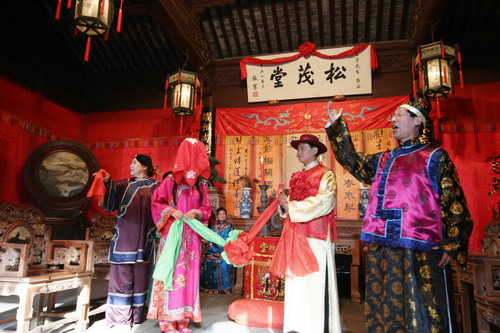
The Mandarin Jacket, a traditional attire emblematic of Chinese sartorial elegance, has been a significant part of Shanghai's cultural and fashion evolution. Known for its unique design elements and cultural symbolism, the Mandarin Jacket represents a blend of historical influences and modern adaptation. This attire is recognized for its refined aesthetics, often embodying the delicate and inclusive philosophy that defines Shanghai's fashion ethos.
Historical Background
Shanghai's fashion landscape has been shaped by numerous cultural influences over centuries. Prior to 1843, the city's culture was predominantly influenced by the southern regions of the Yangtze River, particularly the areas that are today recognized as Jiangsu and Zhejiang provinces. These regions were historically part of the ancient kingdoms of Wu and Yue, which contributed significantly to the traditional cultural and fashion elements seen in Shanghai.
Shanghai, as one of the five ports opened to international trade following the signing of the Treaty of Nanking, witnessed a significant shift in its sartorial choices. Traditional Chinese garments like the Mandarin Jacket started to be supplemented by Western-style suits and accessories, marking a pivotal transformation in the local fashion narrative.
Evolution of Shanghai Fashion
The establishment of the Republic of China in 1912 marked a new era of cultural integration between Eastern and Western styles. This era saw a blend of traditional and modern fashion, where men typically donned suits, pinched hats, canes, and gold-framed glasses, while women opted for simple turtleneck sweaters paired with long skirts or skorts. This period represented a remarkable amalgamation of cultural aesthetics, showcasing the adaptability and evolving nature of Shanghai fashion.
During the 1920s to 1940s, Shanghai emerged as a cosmopolitan hub in China, with fashion reflecting the city's prosperity and modernity. A discerning consumer base began to form, prioritizing attire that aligned with their age and body shapes. This led to the prominence of coats, jackets, and cheongsams as the representative clothing of the era, signaling a departure from traditional Zhongshan suits.
Post-1949 Fashion Trends
Following the establishment of the People's Republic of China in 1949, Shanghai's fashion adapted once more, reflecting a more frugal lifestyle. Traditional attire, including embroidered shirts and Zhongshan clothes, saw a resurgence. This trend persisted until 1978, coinciding with China's reform and opening-up period. With this new era came a renewed interest in Western fashion, characterized by trumpet trousers, jeans, short skirts, and sportswear. These styles, though initially perceived as foreign and unconventional, gained popularity in Shanghai, particularly among younger demographics.








